A Breast Health Playbook for Your Team

BREAST HEALTH EDUCATION FOR YOUR WORKPLACE
CheckMate Works is a simple breast health education program for the workplace. At no cost to employers, it provides a unique opportunity to support employee well-being beyond traditional benefits by helping teams understand breast cancer risk and the importance of early detection.
Many people don’t know their real breast cancer risk, and that isn’t their fault. Screening guidelines are confusing, family history isn’t the full picture, and most diagnoses come without warning.
When breast cancer is found early, over 99% of women can see high rates of survival with treatment. By sharing Brem Foundation's risk quiz and resources with your team, you give them something that’s actionable and potentially life-saving: information that's personal to them.
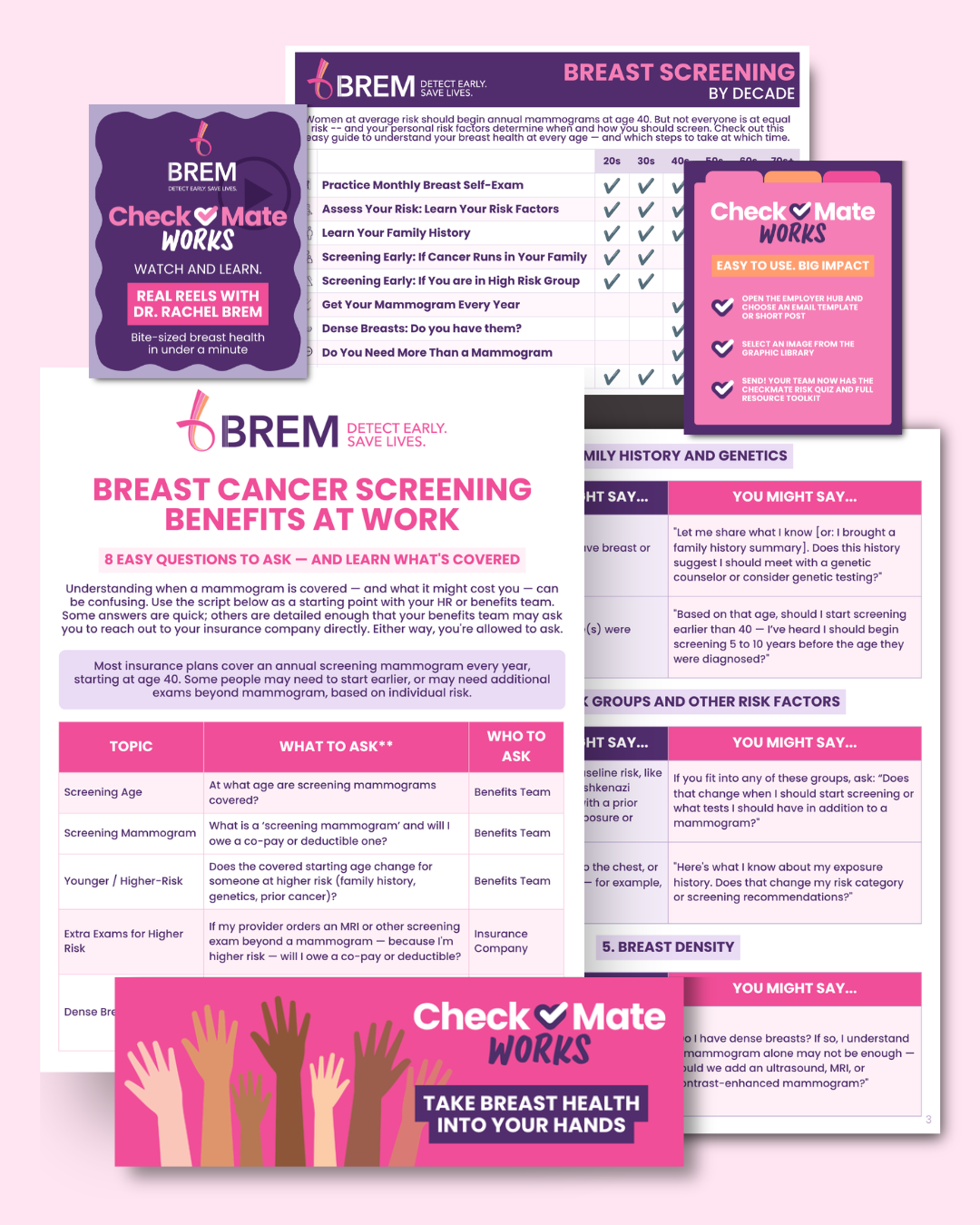
EMPLOYER GUIDE & TOOLS
Plug-and-Play Communication Templates, ready to send with zero writing required.
CheckMate Risk Quiz, a free three-minute tool that gives every employee their personalized risk factors for breast cancer and follow-up questions for their provider.
Self-Advocacy Scripts that tell employees exactly what to ask their doctor.
Everything is free, self-guided, mobile-friendly, and doesn’t require an account.
AND THAT’S JUST THE START
WHY EARLY DETECTION MATTERS
WHY EDUCATE YOUR TEAM?
PROTECT
Your Workplace
A free, easy to use, breast health program that fits in a single email. Plug-and-play templates, a year-round activation calendar, and a toolkit built for real employers with limited time.

EMPOWER
Your Team
Personalized risk information, an easy, free three-minute risk quiz, and a clear next steps — all available on any device, on their own schedule.
LEAD
Your Community
Showing employees you care about their whole health isn't just good for them. It's good for your workforce, your attraction and employee value proposition, your retention, and your culture.


BRING CHECKMATE WORKS TO YOUR TEAM
Sign Up to Get More Information