
Hadly Clark's Early Detection Story
Hadly Clark
Director of the FasterCures program at the Milken Institute
Brem Young Professional Advisory Council
Was your cancer detected early? If so, how?
Yes. I am so lucky! I was diagnosed following my very first screening mammogram. I have an amazing OBGYN who reminded me that because I was turning 40 later in the year, I needed to have a screening mammogram. To be honest, at first, I pushed back a bit. I was still 39 and worried that insurance wouldn’t cover my mammogram until my birthday passed. She “put the order in” the system and said I could schedule it whenever it was most convenient for me given my hectic work and travel schedule. That’s how I was diagnosed, just two months shy of my 40th birthday.
Did any support help you access care?
My family, friends, and coworkers really rallied behind me throughout my diagnostic and treatment journey. The facility where I receive my care is about a 30-minute drive from my home and the weeks following surgery I couldn’t drive. I relied on family and friends to help me get to my appointments, take notes, and help fill prescriptions or pick up food. My care team also checked in on me before, during, and after treatment to help me understand what support options I had, such as copay assistance, transportation services, and mental health support.
How did your treatment team educate you about your options?
I am very fortunate to have an incredible care team. Admittedly, I was very nervous being part of an HMO in a fully integrated system like Kaiser. The assumption was that I would have limited choices or freedom in choosing my doctors; however, I was able to meet with multiple clinicians before I decided on the care team that best met my personal needs—it was such an important decision, and I am incredibly satisfied with the care I’ve received.
Did you have to ask for more information, more testing, or different care?
Yes, I did. I asked about options for additional testing, an MRI in my case, to help inform the type of surgery I would have.
What do you wish you had known about screening or risk?
Despite working in the oncology space for more than a decade, I assumed that the primary risk factor for breast cancer was genetic risk. I had no idea that most women diagnosed with breast cancer not only have no genetic risk factors but also have no other risk factors. Prior to my diagnosis, I was otherwise totally healthy with no comorbidities or other chronic conditions. I think that’s why it’s so important to get screened. I think I wrongly assumed that I didn’t meet the profile of someone with breast cancer, so I was initially a bit dismissive.
How did your treatment impact your daily life?
Working in the oncology field, I was acutely aware of the mental toll and body dysmorphia that people experience following surgical interventions like a lumpectomy or mastectomy. However, experiencing it first-hand is sobering—especially at 39. Going through a life-changing surgery on top of a cancer diagnosis while working full time and trying to have a social life has been incredibly difficult. I had never had surgery before, so I wasn’t really sure what recovery would be like. I was humbled by my T-Rex arms and by how limited my movement was for the first couple of weeks, and by how basic tasks—like opening and closing doors—were challenging. However, in the grand scheme of things, recovering for a few weeks from surgery is such a blessing compared to more intensive recovery from therapeutic interventions like chemotherapy or immunotherapy. I am so grateful my cancer was identified early and could be completely removed through surgery.
Where are you now in your treatment or recovery?
I am nearly 9 months out from my bilateral mastectomy and will soon be undergoing phase II breast reconstruction.
How did you learn about Brem?
I knew about the Brem Foundation through Dr. Brem’s leadership and the organization’s tremendous advocacy and knew I wanted to help advance the mission even before my own personal diagnosis.
What moves you to share your story?
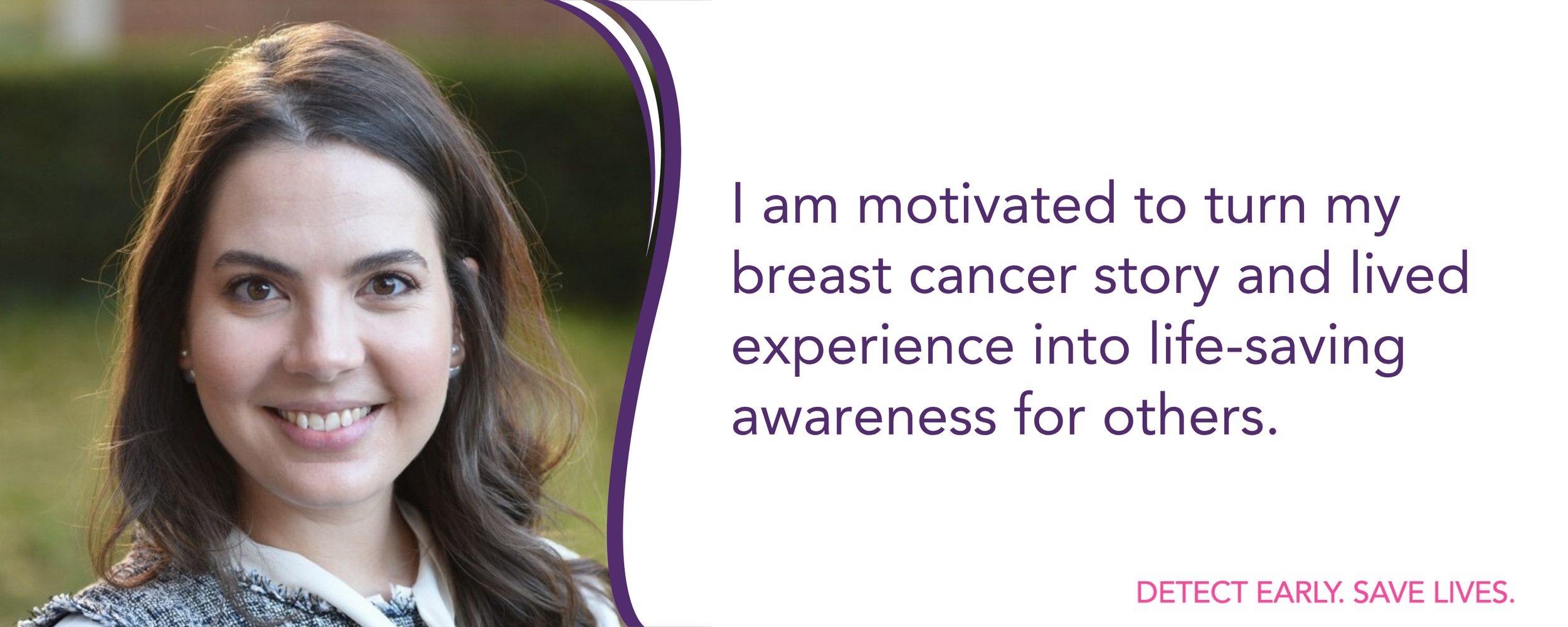
I am motivated to turn my breast cancer story and lived experience into life-saving awareness for others.
Is there anything you learned from other cancer survivors’ stories?
I was very privileged to connect with several breast cancer survivors through friends and colleagues who had a similar diagnosis as mine. They generously shared their personal lived experiences, and I learned nuances about the different types of surgery, recovery, and potential long-term side effects from people like me. This really influenced my decision-making with my care team and helped me feel empowered to ask questions about what was best for my journey. My “breasties” validated my feelings of confusion, guilt, fear, and grief in a powerful way. Being surrounded and supported by women who had navigated similar challenges before me helped me feel less alone. I am forever grateful to the small but mighty community of women who continue to carry me through this.
What do you wish more women knew about breast health and screening?
I wish more women understood when and how they should start screening for breast cancer, the impact of breast density on risk, and that early detection saves lives. Breast health is more than just screening; it’s about awareness, access, and acting early. Knowing what I know now from my own journey, I cannot emphasize the importance of talking to your doctor about how and when to start your breast cancer screenings based on your unique personal risk—it could save your life!